Here On The Elderberry Farm
We proudly grow ten different varieties of American Elderberry (Sambucus Canadensis), nurturing each plant from blossom to berry. These shrubs thrive in our soil and climate, rewarding us each year with abundant clusters of fragrant flowers and rich, purple berries.
Walking through the elderberry rows in midsummer—with their creamy white flower umbels swaying in the breeze—is one of the most beautiful sights on the farm. By late summer, the plants transform again, covered in heavy, jewel-toned berry clusters ready for harvest.
Our growing practices focus on:
Healthy, living soil
Regenerative farming practices
Minimal interference
Respect for the natural growth cycle of the plant
Because elderberry is a hardy native species, it thrives with gentle organic care and sustainable farming methods. It’s a crop that gives back generously to the land and supports pollinators, wildlife, and biodiversity.
-
American elderberry (Sambucus canadensis) is a fruiting shrub native to North America. With its creamy white blossoms and deep purple berries, it has been cherished for generations for its versatility, resilience, and wellness-supporting qualities. Unlike its European counterpart (Sambucus nigra), American elderberry thrives naturally in our climate.
-
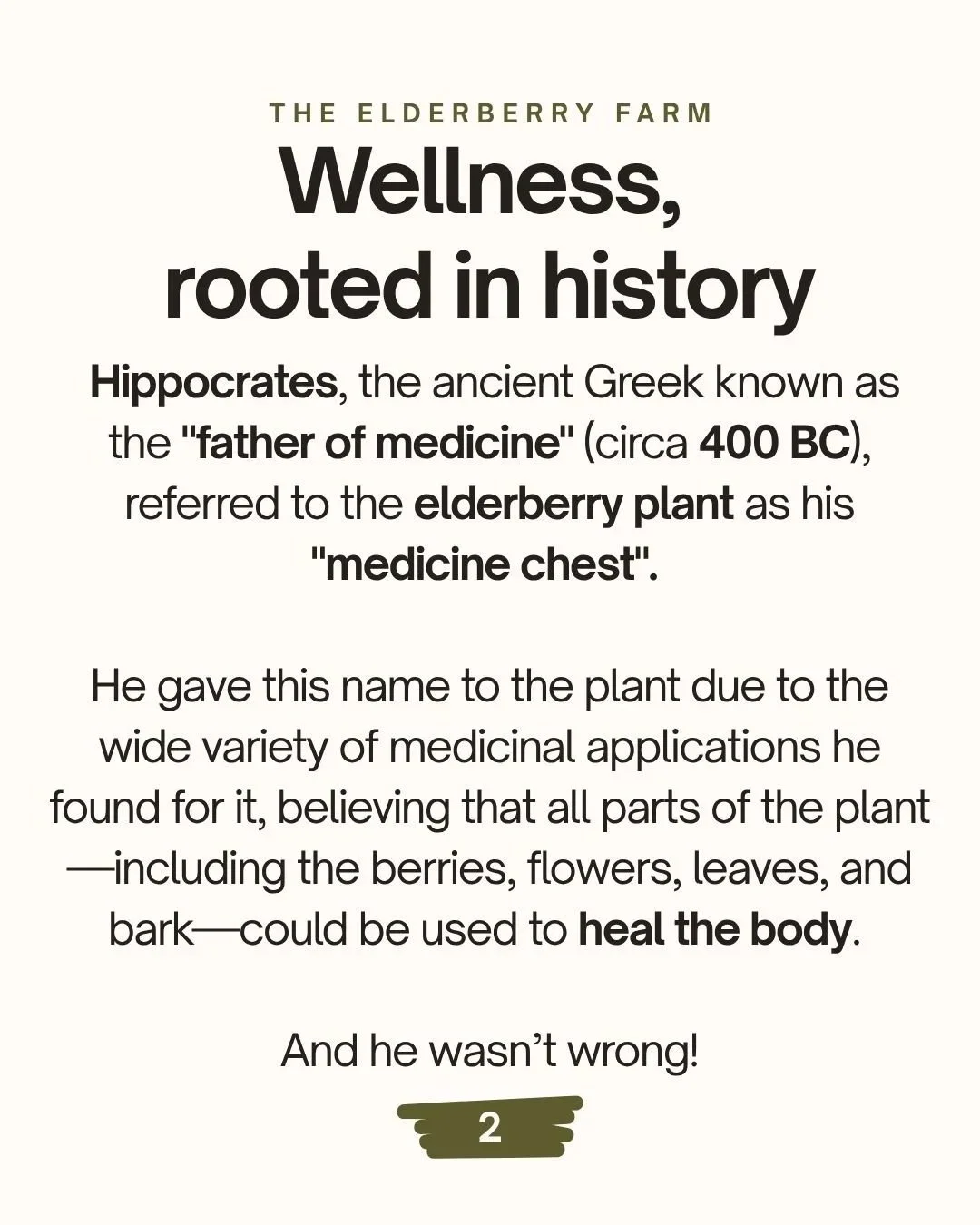
For centuries, American elderberry has held an important place in North American traditions.
Indigenous communities used the berries, flowers, and bark for teas, tonics, dyes, and practical crafting.
Early settlers continued these uses, incorporating elderberry into seasonal remedies, preserves, wines, and homestead gardens.
By the 19th and early 20th centuries, elderberry had become a familiar plant in rural landscapes.
Today, renewed interest in native plants and natural wellness has put elderberry back in the spotlight—supported by modern research and sustainable farming.
-
Historically, Sambucus canadensis has been used for:
Immune-supporting syrups, teas, and hot infusions
Seasonal wellness during cold months
Culinary creations like jams, jellies, pies, wines, and vinegars
Refreshing flower teas, cordials, and beverages
These long-standing uses reflect elderberry’s role as both a practical and wellness-focused plant in everyday life.
-
Modern interest in elderberry is rising, driven by:
1. Minimal-Processing Products
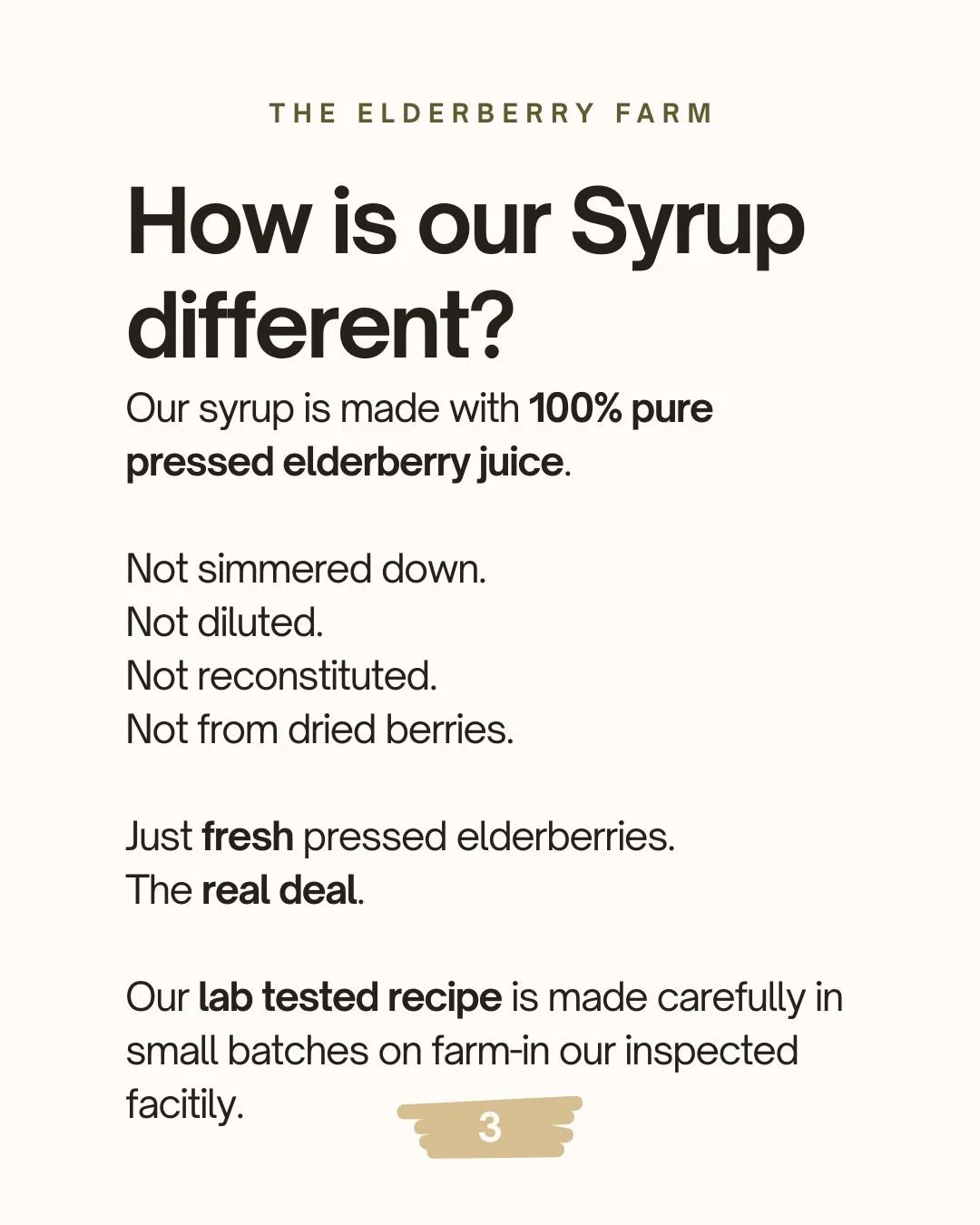
Cold-pressed juices, un-diluted syrups, and gently handled berries are more in demand than ever before.
2. Active University Research
The University of Missouri leads the way with studies on:
Cultivar development
Sustainable growing practices
Nutrient composition
Commercial potential
This research is helping build a strong future for American elderberry.
https://elderberry.missouri.edu/
https://research.missouri.edu/news/rise-of-elderberry
3. Modern Culinary Use
From teas and syrups to ciders, cocktails, vinegars, sauces, and baked goods, elderberry is becoming a favourite ingredient for chefs and home makers.
4. Increased Awareness of Native Plants
More consumers and growers are seeking plants that support local ecosystems—making Sambucus canadensis a standout choice.
-
Although American elderberry (Sambucus canadensis) and European elderberry (Sambucus nigra) look similar, they differ in their natural chemistry—especially in their raw toxicity levels.
Both species contain naturally occurring compounds in their raw berries, stems, leaves, and unripe fruit that can cause digestive upset if consumed uncooked. However, research and field experience show:
Low Toxicity in American Elderberry
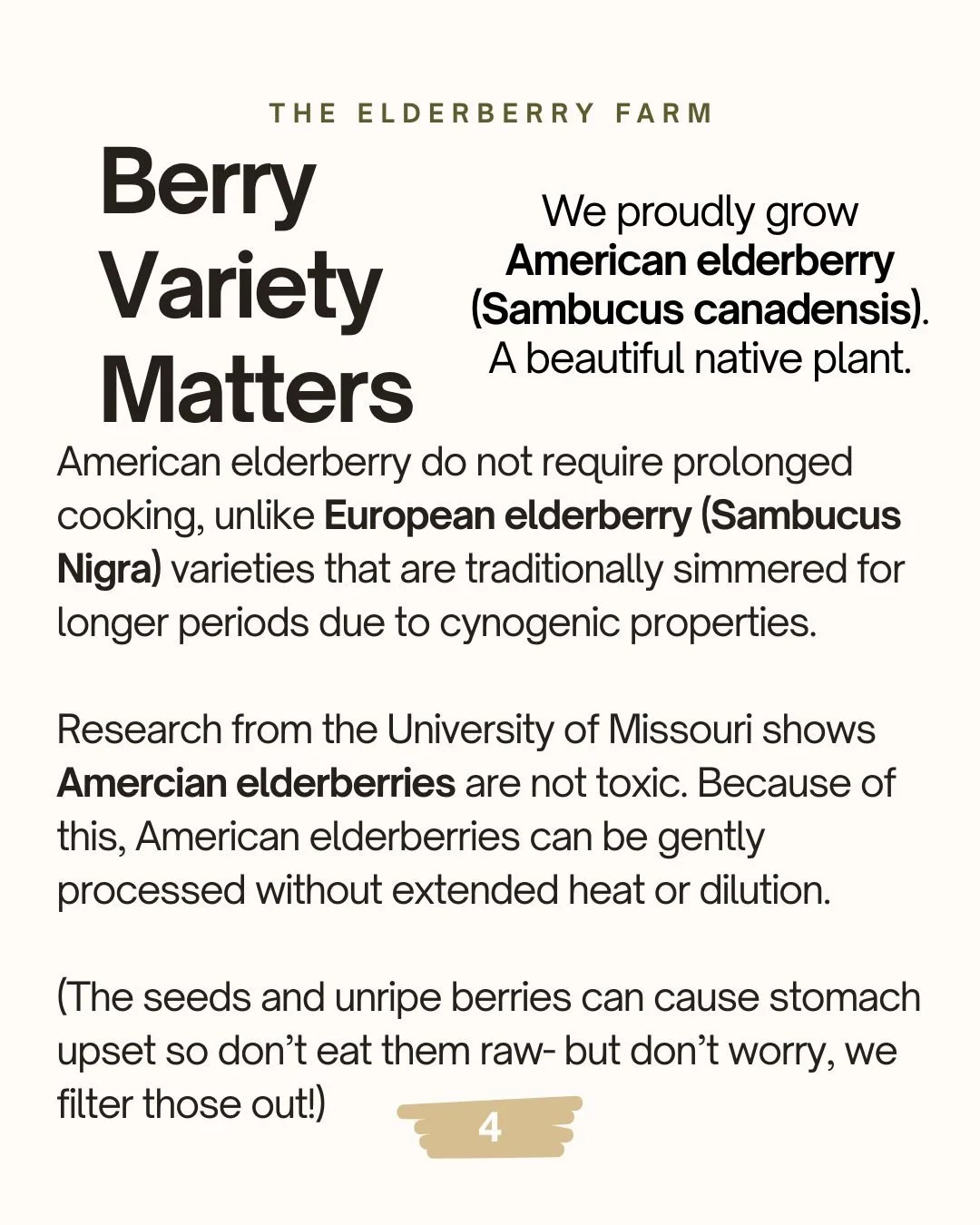
Studies from the University of Missouri and other North American research programs indicate that Sambucus canadensis contains low levels of cyanogenic glycosides compared to Sambucus nigra.
This means:Ripe American elderberries have significantly lower raw toxicity than fresh European varieties.
With proper processing—light heating, juicing, or dehydrating—both species are considered safe for use in syrups, juices, and culinary products.
The lower cyanogenic content is part of what makes American elderberry particularly well-suited for North American farms and small-batch production.
Why This Matters for Consumers
The difference in natural compounds between the two species has become important as more people seek local, minimally processed elderberry products. With the rise of cold-pressed and gently heated juices, using the correct species is essential to ensure both quality and safety.
-
A surprising but important fact:
Most elderberry products sold in Canada are not made from Canadian-grown elderberries.Instead, the majority of elderberry ingredients on the market are:
Imported from overseas, primarily European Sambucus nigra
Made from dried berries or powders that have been transported long distances
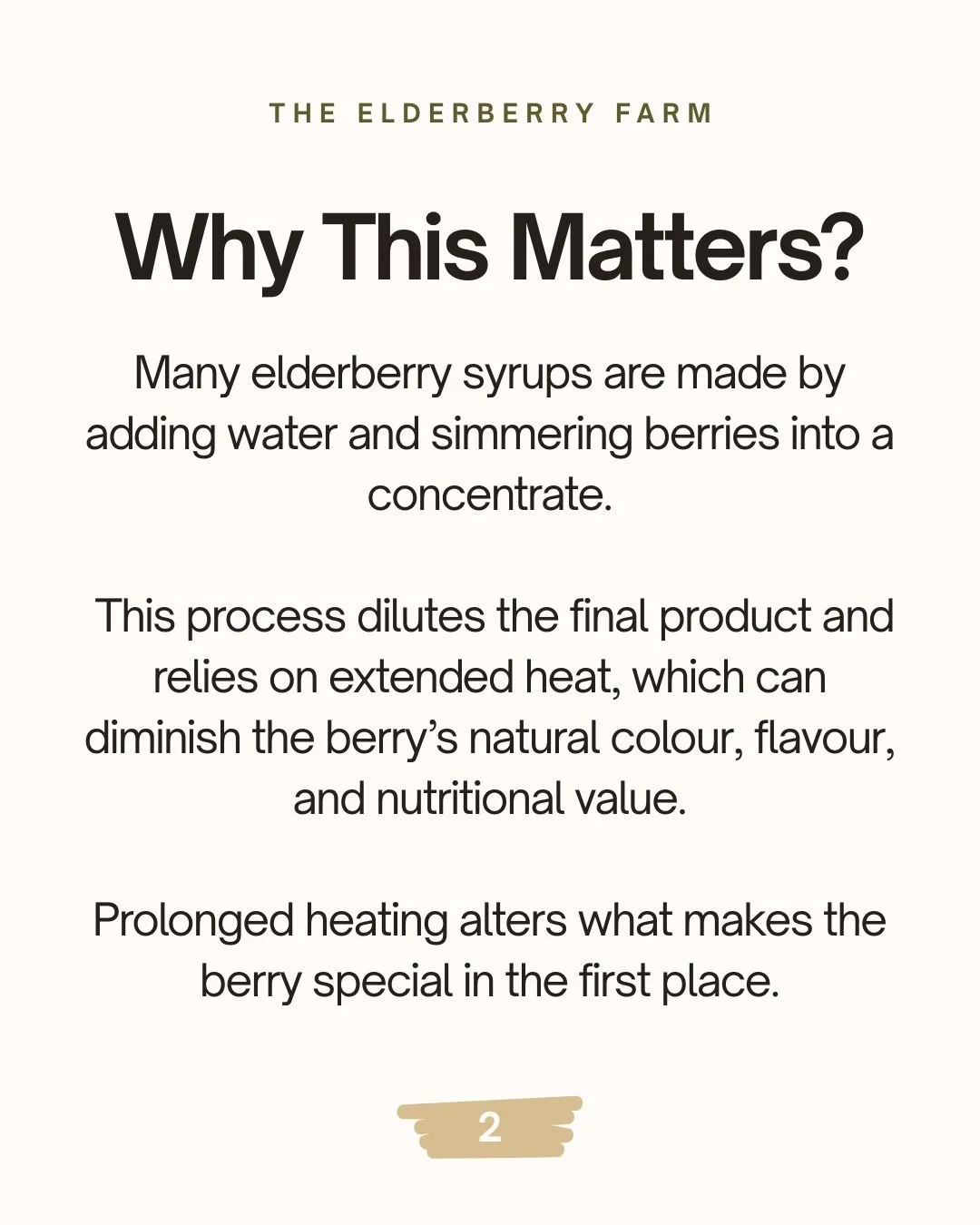
Often blended, reconstituted, or processed through large-scale extract manufacturing
This means many “elderberry” products in Canada:
Do not use fresh fruit
Do not use Canadian-grown elderberries
Do not use Sambucus canadensis, despite it being a native North American species
-
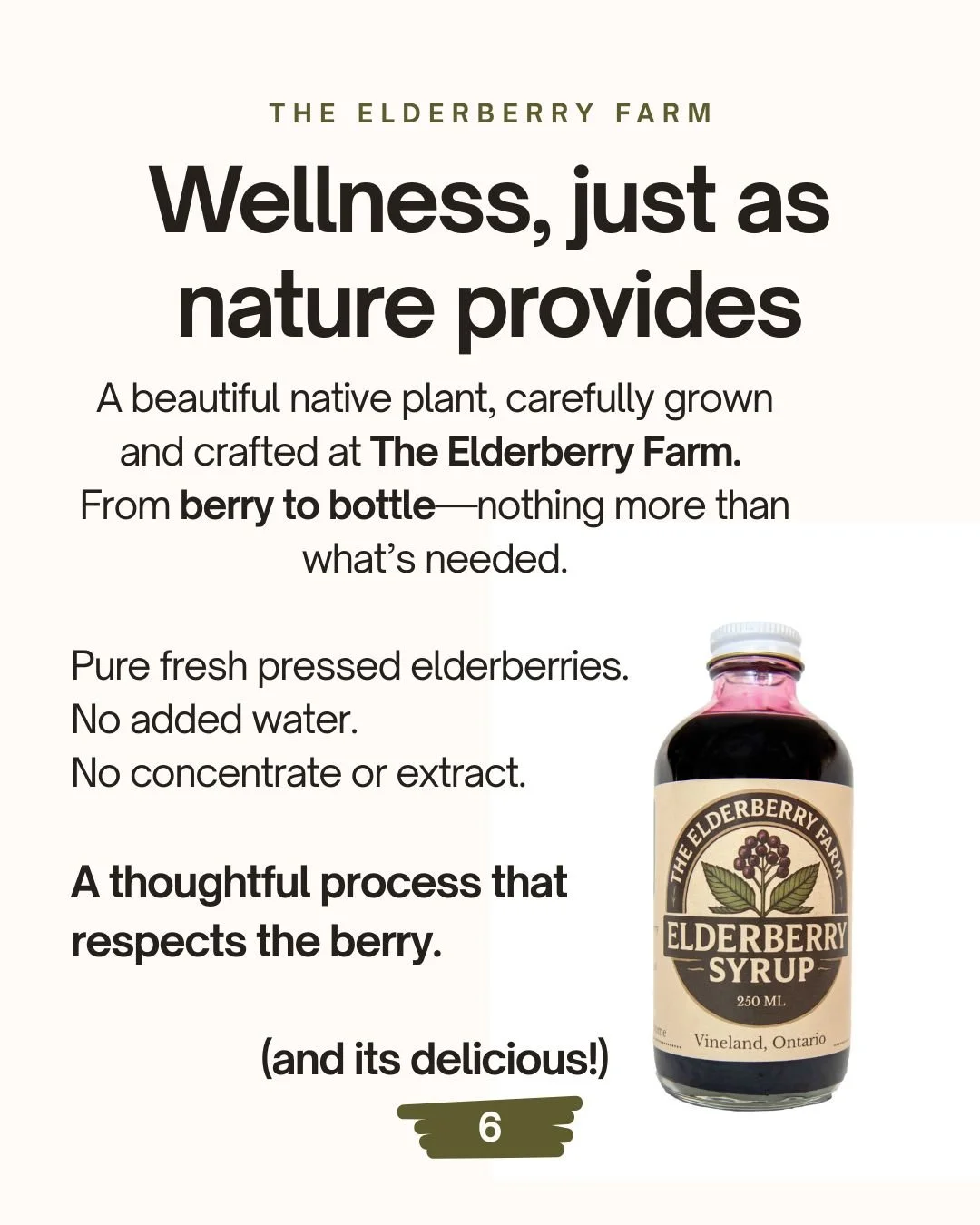
We hand harvest our berries at peak ripeness and process immediately to maintain quality.
Using our own berries allows us to:Ensure traceability from plant to bottle
Avoid long-distance drying, shipping, or rehydration
Maintain the beautiful colour, flavour, and freshness of Sambucus canadensis
Highlight a true Canadian-grown elderberry product
For customers, this means a product that is:
Fresh
Local
Minimally processed and majorly potent
Made from the native elderberry species that grows naturally here
BERRY TO BOTTLE it’s all done here at The Elderberry Farm